

For South African students, the Admission Point Score (APS) is a critical number that determines your eligibility for unuiversity programs. Understanding how to calculate your APS and knowing how it affects your chances can help you make informed decisions, especially if you plan to apply to any varsity in South Africa after receiving your final matric results.
In this guide, we’ll break down what APS is, how to calculate it, and tips to maximize your chances of acceptance.
What is the APS?
The APS is a point system used by South African universities to evaluate matric results. Each subject you pass in your National Senior Certificate (NSC) is assigned points, and your APS is the sum of these points. Universities use APS as a quick way to determine if you meet minimum entry requirements for their programs.
Why it matters:
- Some programs have higher APS requirements than others.
- Even if your matric results are strong, a low APS can limit your options.
- Knowing your APS helps you target programs that match your marks.
- Bursaries and scholarships often use your APS in assessing eligibility criteria
How to Calculate Your APS
Each university may have slight variations in their APS calculations, but the general system works like this:
| Matric Level | Percentage | APS Points |
|---|---|---|
| 7 (Outstanding) | 80–100% | 7 |
| 6 (Merit) | 70–79% | 6 |
| 5 (Substantial Achievement) | 60–69% | 5 |
| 4 (Moderate Achievement) | 50–59% | 4 |
| 3 (Adequate Achievement) | 40–49% | 3 |
| 2 (Elementary) | 30–39% | 2 |
| 1 (Not Achieved) | 0–29% | 0 |
Step 1: Write down your final matric marks for all your subjects.
Step 2: Convert each subject mark into APS points using the table above.
Step 3: Add the points together. The sum is your total APS.
Tip: Some universities exclude Life Orientation or count it differently (any level below 7 as 0, 7 being counted as 1). Always check the specific university’s APS guide. You must also note that other universities or collages in South Africa use other methods of calculate your application point score such as Rhodes University and Nelson Mandela University, but this is the most used method.
How APS Affects University Admission
- Minimum entry requirements: Each program has a minimum APS score. For example, Engineering programs often require higher APS than Humanities.
- Late applications: If you receive your results late, knowing your APS quickly allows you to identify courses you qualify for at universities that accept late applications.
- Scholarships & bursaries: APS scores are often used to determine eligibility for merit-based funding.
Tips for Students After Receiving Results
- Check multiple universities: Not all universities calculate APS the same way.
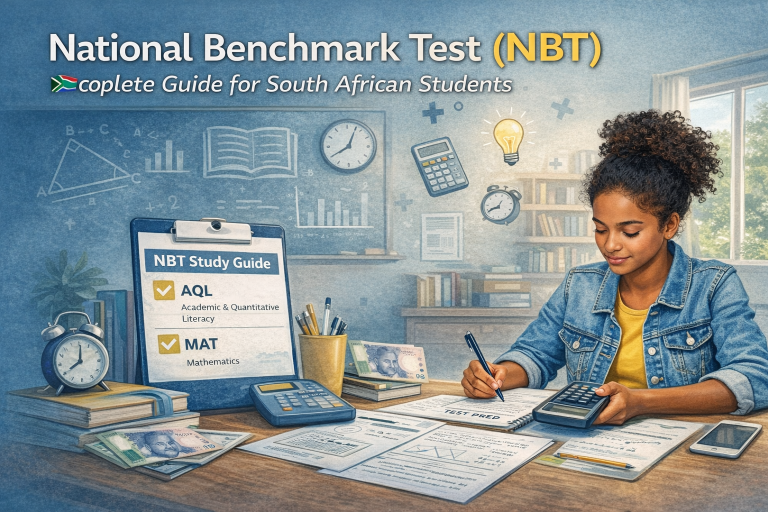
- Consider NBT requirements: Some programs also require the National Benchmark Tests (NBT). Your APS alone may not be enough.
- Plan for late applications: Universities like Unisa, NWU, or Varsity College may allow late applications once results are released.
- Use online APS calculators: Most universities provide a free APS calculator on their site to avoid mistakes.
What You Should Do Next
Once you know your APS score, you are in a much better position to make smart academic decisions. Start by comparing your APS with the minimum requirements of the courses and universities you are interested in. This will help you avoid wasting time on applications where you do not meet the criteria.
If your APS is lower than expected, don’t panic. Many universities offer alternative programmes, extended curricula, or accept late applications after final matric results are released. In some cases, writing the National Benchmark Tests (NBTs) can also strengthen your application.
Most importantly, act quickly. Application windows, late admission opportunities, and funding options often operate on strict timelines. Understanding your APS early gives you the advantage of planning ahead and keeping your university options open.