

Once you’re done with your NSFAS funding application, the next step is to check and monitor your NSFAS status. At this point, many students especially during this step ask themselves, “what does it mean?”, “should I be worried?”. These questions are not only common to first years but also to returning students. In this article I’ll show you exactly how to check your NSFAS status and try to explain its exact meaning referencing to NSFAS official site.
Importance of checking your NSFAS status
NSFAS began releasing status updates around the 15th of December 2025. It is crucial to check and monitor your NSFAS status so that you know where you stand in terms of funding and the next step(s) to take. Following are some of the reasons why checking your status matters:
- You can react quickly to document requests
- You get to know if your funding is approved or need to appeal within appeal window or time given
- Tracking your application process. This is bonus if there are problems with your application
How to check your NSFAS application status
There’re three ways to check your NSFAS funding status, I’ll list them based on popularity and convenience
1. myNSFAS Portal via NSFAS official site or application
- Go to my.nsfas.org.za
- Log in with your ID and password
- Open the Application Tracker or Track Funding Progress
This shows your exact status.
2. WhatsApp
- Save NSFAS official WhatsApp number, +27 78 519 8006
- Send any text or simple greeting
- Follow the prompts and receive your status
3. USSD Method
Call *120*67327#, enter ID number and follow other prompts when needed. Note, this might cost cost minimal airtime.
Common NSFAS 2026 Statuses and What They Mean
📌 Application Received
Your application is in the system, but verification hasn’t started.
📌 Under Review or Verification
NSFAS is checking your details against government and third‑party sources to confirm eligibility.
📌 Requesting Financial and Academic Data
NSFAS is awaiting for data to be confirmed, after that they will then assess if you’re financially and academically eligible for funding.
📌 Assessing Academic Eligibility
Using information from various sources, NSFAS is checking your household income to assess if you qualify financially. Note, your annual income threshold must not be above R350 000 or R600 000 if you’re disabled to qualify.
📌 Awaiting Academic Results
Your application is currently being assessed for academic eligibility, but NSFAS has not yet received your results. Your institution is responsible for sending academic results to NSFAS.
📌 Application in Progress
Your application is currently being reviewed, NSFAS has not yet made final decision on it.
📌 Funding Eligibility
You qualify for funding, but NSFAS will confirm your funding once you’re registered at your academic institution and is subject to availability of funds.
📌 Registration Received
Your application has passed all evaluation steps and met the funding criteria. This is the final stage of successful application. Congrats!
📌 Rejected
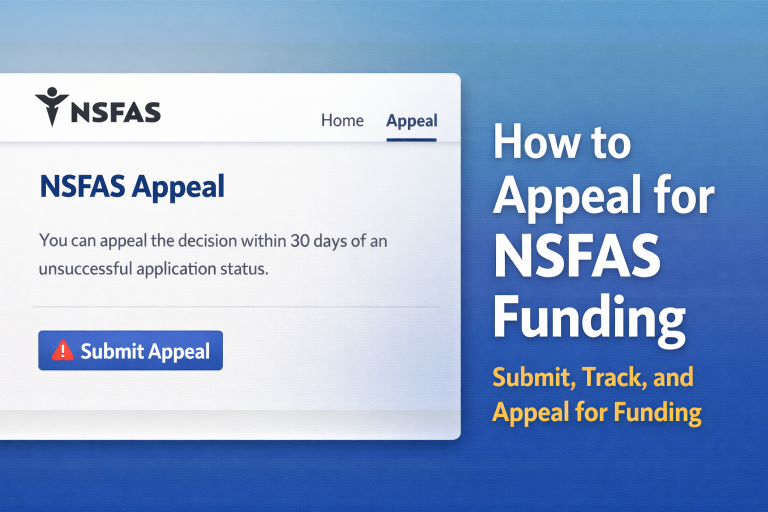
Your application was not approved as it has not met all funding criteria. You will then be required to appeal if possible. Note, your appeal window has limited time, usually 30 days.
For more info on statuses not discussed in this article please visit NSFAS official site or communication channels to inquire about it.
My final thoughts
If your funding is rejected please note it is not the end of the world and you can always appeal within time. Check your status more often until approved, maybe once per week. If your funding is approved congrats, do not let the opportunity slide out of your hands, if you encounter any challenges seek for professional help from your academic advisors or seek counselling. Lastly and most importantly, DO NOT SHARE YOUR CONFIDENTIAL DETAILS such as ID with anyone claiming to assist or fasten your application. Check out NSFAS application guide I wrote if you’re unsure on how to apply for NSFAS funding. Thank you for reading my article.